
What Makes a Lithium Polymer Battery the Best Choice for Modern Electronics
A Lithium Polymer Battery has become a core power solution for modern electronics thanks to its lightweight structure, flexible form factor, and high energy density. In this in-depth guide, we explore how lithium polymer batteries work, how they compare with lithium-ion batteries, their key advantages, applications, safety considerations, and how to choose the right battery for your project. This article is designed to support engineers, product managers, and buyers seeking reliable battery solutions from trusted manufacturers such as VCELL POWER.
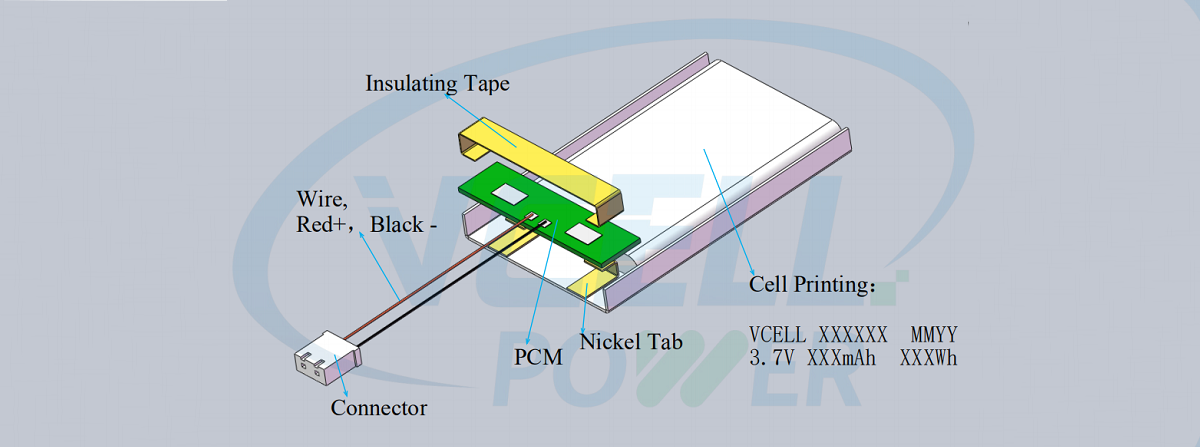
Table of Contents
- 1. What Is a Lithium Polymer Battery?
- 2. How Does a Lithium Polymer Battery Work?
- 3. Lithium Polymer Battery vs Lithium-Ion Battery
- 4. Key Advantages of Lithium Polymer Batteries
- 5. Common Applications of Lithium Polymer Batteries
- 6. Custom Lithium Polymer Battery Solutions
- 7. Safety, Lifespan, and Maintenance
- 8. How to Choose the Right Lithium Polymer Battery
- 9. Frequently Asked Questions (FAQ)
1. What Is a Lithium Polymer Battery?
A Lithium Polymer Battery is a rechargeable battery that uses a polymer electrolyte instead of a traditional liquid electrolyte. This structural difference allows the battery to be thinner, lighter, and more flexible in shape compared to conventional lithium-ion batteries.
Unlike cylindrical or rigid prismatic cells, lithium polymer batteries are typically packaged in soft aluminum-plastic film, making them ideal for space-constrained devices and modern product designs.
2. How Does a Lithium Polymer Battery Work?
A lithium polymer battery operates by moving lithium ions between the cathode and anode through a polymer-based electrolyte. During charging, lithium ions migrate to the anode; during discharge, they flow back to the cathode, releasing electrical energy.
- Polymer electrolyte improves structural flexibility
- Lower internal resistance supports high discharge rates
- Stable voltage output for sensitive electronics
3. Lithium Polymer Battery vs Lithium-Ion Battery
| Feature | Lithium Polymer Battery | Lithium-Ion Battery |
|---|---|---|
| Electrolyte Type | Polymer-based | Liquid electrolyte |
| Form Factor | Flexible, ultra-thin | Rigid cylindrical/prismatic |
| Weight | Lighter | Heavier |
| Design Freedom | High | Limited |
| Cost | Moderate to high | Lower |
4. Key Advantages of Lithium Polymer Batteries
- High energy density in compact designs
- Customizable shapes and sizes
- Low self-discharge rate
- Excellent performance for portable electronics
- Improved safety with proper protection circuits
These advantages make the lithium polymer battery a preferred choice for next-generation smart devices.
5. Common Applications of Lithium Polymer Batteries
- Smartphones and tablets
- Wearable devices
- Medical monitoring equipment
- Bluetooth and IoT devices
- Drones and RC products
6. Custom Lithium Polymer Battery Solutions
Many modern applications require custom lithium polymer battery solutions to meet specific voltage, capacity, and size requirements. Manufacturers like VCELL POWER provide tailored battery designs to support unique product architectures.
Custom options may include:
- Cell dimensions and thickness
- Capacity and discharge rate
- PCM/BMS integration
- Connector and wire customization
7. Safety, Lifespan, and Maintenance
A lithium polymer battery is safe when designed and used correctly. Built-in protection circuits help prevent overcharging, over-discharging, and short circuits.
Typical lifespan ranges from 300 to 800 charge cycles depending on usage conditions.
8. How to Choose the Right Lithium Polymer Battery
- Confirm voltage and capacity requirements
- Evaluate physical size constraints
- Check discharge rate needs
- Ensure compliance with safety standards
- Select a reliable lithium polymer battery manufacturer
9. Frequently Asked Questions (FAQ)
Q1: Is a lithium polymer battery better than lithium-ion?
It depends on the application. Lithium polymer batteries excel in thin, lightweight, and custom-shaped designs, while lithium-ion batteries may offer cost advantages in standardized formats.
Q2: How long does a lithium polymer battery last?
With proper use, a lithium polymer battery typically lasts several years or hundreds of charge cycles.
Q3: Can lithium polymer batteries be customized?
Yes. Custom lithium polymer battery solutions are widely available for specialized electronic devices.
Choosing the right Lithium Polymer Battery is critical to the performance, safety, and lifespan of your product. As an experienced manufacturer, VCELL POWER delivers reliable, high-quality lithium polymer battery solutions tailored to modern electronics. If you are looking for a dependable battery partner or need a custom design, contact us today to discuss your project requirements and power solutions.
Send Inquiry
-
WhatsApp
-
E-mail