
What is the Difference Between Lithium and Lithium Ion Batteries?
What is the Difference Between Lithium and Lithium Ion Batteries? This question frequently arises among customers choosing between traditional lithium batteries and modern Lithium Ion Battery technologies. As a professional manufacturer and supplier, VCELL POWER CO., LTD. provides an in-depth comparison that clarifies their chemical composition, performance, lifespan, and applications. Our factory specializes in developing high-quality Lithium Ion Battery products that meet global performance and safety standards.
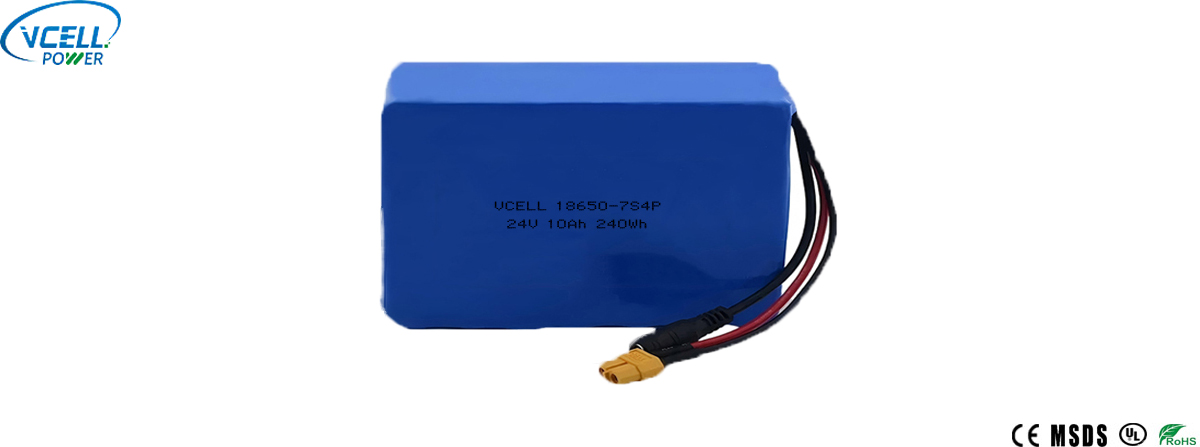
Detailed Comparison Between Lithium and Lithium Ion Batteries
The following section provides a comprehensive comparison of lithium and lithium ion batteries based on structure, rechargeability, safety, and performance. Understanding these differences helps customers make the best decision for their power needs.
| Aspect | Lithium Battery | Lithium Ion Battery |
| Chemical Composition | Uses metallic lithium as the anode with non-aqueous electrolyte. The reaction is irreversible, making it a primary (non-rechargeable) cell. | Uses lithium compounds such as LiCoO₂ or LiFePO₄. Lithium ions move between electrodes during charge and discharge, allowing rechargeability. |
| Rechargeability | Non-rechargeable; designed for single use only. | Fully rechargeable and capable of hundreds to thousands of cycles depending on material and management system. |
| Energy Density | Typically around 100–130 Wh/kg. | Higher, ranging from 150–250 Wh/kg for advanced models. |
| Voltage Output | Stable output but drops permanently when depleted. | Stable voltage maintained across cycles; designed for regulated power output. |
| Lifespan | Limited to one discharge cycle; must be replaced after use. | Long lifespan—often exceeding 1000 charge cycles under proper maintenance. |
| Safety | Can be volatile if exposed to high heat or moisture due to metallic lithium reactivity. | Equipped with safety circuits and management systems to prevent overcharge and overheating. |
| Applications | Used in watches, remote controls, cameras, and other low-drain devices. | Commonly used in electric vehicles, power tools, and renewable energy storage systems. |
| Environmental Impact | Creates more waste as it cannot be recharged or reused effectively. | Rechargeable and recyclable; lower environmental footprint. |
| Cost Efficiency | Cheaper initially but more expensive over time due to single-use design. | Higher upfront cost but long-term savings from multiple recharges. |
Technical Parameters of Our Lithium Ion Battery Products
At VCELL POWER CO., LTD., our factory develops a wide range of Lithium Ion Battery products that deliver stable voltage, long cycle life, and exceptional energy efficiency. Below are some representative specifications.
| Model | Nominal Voltage (V) | Capacity Range (Ah) | Energy Density (Wh/kg) | Cycle Life (Times) | Operating Temperature (°C) | Application |
| VLFP Series | 3.2 | 20–300 | 180–220 | ≥3000 | -20 to 60 | Solar Storage, EV |
| VLC Series | 3.7 | 5–100 | 200–250 | ≥1000 | -10 to 55 | Consumer Electronics |
| VHP Series | 3.6 | 10–200 | 150–200 | ≥2000 | -30 to 65 | Industrial Equipment |
Rechargeability, Safety, and Environmental Benefits
The most significant advantage of Lithium Ion Batteries lies in their rechargeability and environmental performance. Unlike single-use lithium batteries, Lithium Ion Batteries can be used repeatedly with minimal capacity loss. Our factory’s advanced cell balancing and protection technology ensures safety during every charge cycle. VCELL POWER CO., LTD. also collaborates with certified recycling partners to recover valuable metals and minimize environmental impact.
Cost and Efficiency Analysis
Although lithium batteries may appear cheaper initially, their single-use limitation increases long-term costs. Lithium Ion Batteries provide a more efficient and sustainable solution with high energy density, stable output, and extended service life. With our precision production and material optimization, VCELL POWER CO., LTD. ensures our factory’s Lithium Ion Battery products deliver the best balance between performance and cost efficiency for global clients.
FAQs About What is the Difference Between Lithium and Lithium Ion Batteries?
Q1: What makes Lithium Ion Batteries rechargeable while lithium batteries are not?
A1: Lithium Ion Batteries rely on the reversible movement of lithium ions between electrodes, while lithium batteries use metallic lithium that reacts permanently during discharge. This allows Lithium Ion Batteries to be recharged safely multiple times.
Q2: Which type offers better long-term performance?
A2: Lithium Ion Batteries provide superior long-term performance with higher energy density, stable voltage, and a longer cycle life. Our factory’s battery management systems help maintain over 80% capacity even after hundreds of cycles.
Q3: Are Lithium Ion Batteries safer than lithium batteries?
A3: Yes. Lithium Ion Batteries feature protective circuits, temperature control, and safety vents. VCELL POWER CO., LTD. ensures each product passes rigorous quality and safety inspections before delivery from our factory.
Conclusion
In summary, What is the difference between lithium and lithium-ion batteries? lies in their chemical structure, rechargeability, and sustainability. VCELL POWER CO., LTD. continues to innovate and supply high-quality Lithium Ion Battery solutions, providing global customers with efficient, reliable, and environmentally responsible power solutions.
Send Inquiry
-
WhatsApp
-
E-mail