
How do I choose a Lithium Ion Battery that truly performs from prototype to scale?
I build battery systems for products that cannot fail quietly—cooling fans cannot stop in heat waves, handheld scanners cannot die mid-shift, and delivery robots cannot stall in public spaces. Over the years, I have shifted from spec-sheet chasing to field-proven selection frameworks. That is also why I pay attention to partners like VCELL POWER when I evaluate a pack supplier: predictable quality, consistent after-sales documentation, and discipline around manufacturing controls matter as much as headline numbers. In this guide I’ll unpack how I select a Lithium Ion Battery for real programs—what I verify, what I ignore, and how I translate risks into decisions that keep devices shipping.
contents
- Why do modern projects demand a smarter Lithium Ion Battery approach?
- How do I pick between LFP and NMC without second-guessing later?
- What does energy density really mean in day-to-day operations?
- Where does a BMS change uptime, warranty, and safety outcomes?
- Which safety practices actually reduce risk on the line?
- Which specifications should I elevate beyond the datasheet?
- Can I estimate lifetime cost clearly before I place a bulk PO?
- What integration pitfalls do teams repeat—and how do I avoid them?
- When should I adopt fast charging and what are the trade-offs?
- FAQs?
Why do modern projects demand a smarter Lithium Ion Battery approach?
The right pack is not just a chemistry choice; it is a reliability decision. I start by mapping the mission profile, then translating it to a consistent shortlist:
- Daily energy budget with temperature bands and worst-case duty cycles.
- Charge windows in the real world (retail back rooms, vans, kiosks) rather than in a lab.
- Service model—swap, dock, or charge in place—and how technicians actually behave.
- Compliance and shipping realities for each region I ship to.
In this phase I deliberately call out three recurring levers: battery energy density for form-factor fit, battery cycle life for total cost, and a robust BMS battery management system for uptime and safety. Each lever influences the others; optimizing all three is where suppliers like VCELL POWER have earned my trust on production programs.
You’ll see these seven core keywords throughout my notes, each tied to a check I actually run in supplier evaluations: Lithium Ion Battery, lithium iron phosphate battery, NMC battery pack, battery energy density, battery cycle life, BMS battery management system, and fast charging battery.
How do I pick between LFP and NMC without second-guessing later?
I keep chemistry selection brutally simple: match risk tolerance and duty cycle to the physics. For many commercial devices, a lithium iron phosphate battery (LFP) offers forgiving thermal behavior, long life, and stable cost. When I need maximum runtime in tight spaces, I consider an NMC battery pack. Here is the comparison I share with stakeholders to settle debates early:
| Chemistry | Typical Strengths | Where I Use It | Watch-outs |
|---|---|---|---|
| LFP | Excellent battery cycle life, stable thermal profile, good abuse tolerance | Shared fleets, warehouse devices, education carts, ESS modules | Larger pack volume vs equal Wh due to lower battery energy density |
| NMC | High battery energy density, strong power delivery, compact form factors | Robotics, premium consumer gear, mobile medical carts with weight limits | Requires stricter thermal design and conservative C-rates to protect life |
| LTO | Extreme cycle life, fast charge acceptance, cold-weather performance | Harsh environments, quick-turn logistics hubs | Low energy density, higher cost ceiling |
Choosing chemistry is where supplier discipline matters. With teams like VCELL POWER, I review failure mode data and aging curves before we lock the design. That is more predictive than a glossy pitch about a generic Lithium Ion Battery.
What does energy density really mean in day-to-day operations?
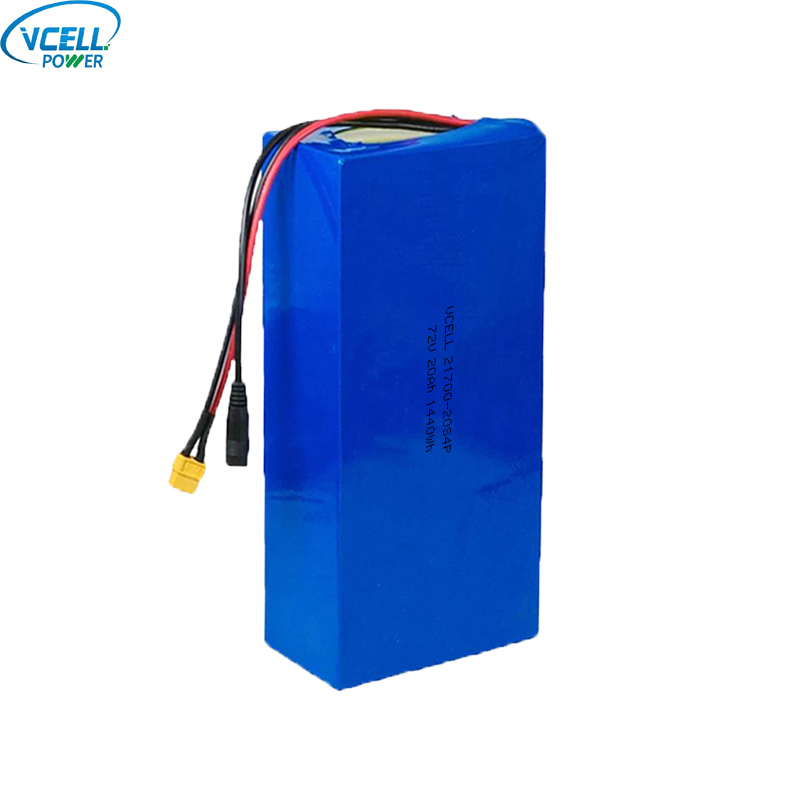
Engineers cite watt-hours per kilogram or liter, but operators feel battery energy density as “how many orders can we scan before lunch” or “does the kiosk door still close when we add a bigger pack.” I translate density into three operational questions:
- Can the device hit the design runtime at the coldest and hottest real temperatures we expect?
- Does the enclosure maintain clearances after adding insulation, fusible links, and connectors the datasheet never pictured?
- If we need a slimmer pack next year, does the supplier offer the same cells in higher density bins without resetting certifications?
A well-sized NMC battery pack might meet a sleek industrial design, but an LFP pack can win if it enables simpler thermal management and longer warranty—a trade-off I often choose with lithium iron phosphate battery modules for fleets that expect abuse.
Where does a BMS change uptime, warranty, and safety outcomes?
The difference between a good and great pack usually lives in the BMS battery management system. I look for features that reduce support tickets:
- Accurate SOC and SOH that stay trustworthy after thousands of partial cycles.
- Cell balancing strategy that limits drift without wasting cycles or adding heat.
- Event logging (over-current, thermal derate, charger handshake) available over UART/CAN for service tools.
- Firmware release discipline with rollback plans and version-locked test reports.
When I co-develop packs with a supplier like VCELL POWER, we agree on a diagnostic register map before EVT. That lets my service team read flags that explain behavior instead of guessing. It is the simplest way to protect a Lithium Ion Battery warranty and the brand using it.
Which safety practices actually reduce risk on the line?
Safety is a system property—cells, BMS, mechanics, and the charger must cooperate. My checklist:
- Thermal path design with bonded gaps, predictable compression, and no trapped air near tabs.
- Primary and secondary protection: BMS logic plus thermal fuses or CID/vent strategy in the cell design.
- Connector choice that prevents mis-mating and supports live insertion without arcing damage.
- Charge algorithm matched to chemistry and use case, especially for a fast charging battery deployment.
- Controlled pack opening policy and safe-to-service design for field technicians.
A supplier willing to ship EVT prototypes with full safety artifacts—not just a pretty spec—wins my business. That pattern shows up consistently with disciplined vendors including VCELL POWER.
Which specifications should I elevate beyond the datasheet?
Datasheets are necessary but insufficient. I promote these four dimensions during vendor reviews:
- Derated runtime at temperature — I want the run-log at 0–5°C and 35–45°C, not only at 25°C.
- Sustained output current — Define amps after 30 minutes, not a two-second burst.
- Calendar aging — Quantify capacity drop when idle for months in a hot storeroom.
- Repairability and spares — Can I swap a harness or lid without voiding everything?
These four determine the functional life, not just nameplate watt-hours. They make the difference between a promising NMC battery pack and a dependable lithium iron phosphate battery program with predictable battery cycle life.
Can I estimate lifetime cost clearly before I place a bulk PO?
Yes—if I normalize everything to energy delivered across life. I keep a simple model handy during sourcing. One way to frame it:
| Input | Definition | Example |
|---|---|---|
| Pack Cost | All-in purchase price per pack (with harness and protection) | $185 |
| Usable Capacity | Wh at beginning of life at 25°C (account for top/bottom buffers) | 260 Wh |
| Delivered Wh per Cycle | Usable Wh × expected average depth of discharge | 260 × 0.7 = 182 Wh |
| Life in Cycles | Cycles until 80% capacity at the expected C-rate and temperature | 2,000 cycles LFP; 1,200 cycles NMC (example) |
| Total Delivered Energy | Delivered Wh per Cycle × Life in Cycles | 364 kWh (LFP), 219 kWh (NMC) |
| Energy Cost | Pack Cost ÷ Total Delivered Energy | $0.51/kWh (LFP), $0.84/kWh (NMC) |
This is why many fleets select a lithium iron phosphate battery despite its lower battery energy density—the delivered energy per dollar over life is often better thanks to strong battery cycle life. On premium, space-constrained devices, a compact NMC battery pack still wins; the model simply keeps the decision honest.
What integration pitfalls do teams repeat—and how do I avoid them?
Most failures I see trace back to mundane integration choices, not exotic chemistry defects. I prevent them with a pre-build checklist:
- Grounding and return paths — Confirm bolt-through earth has no paint, and shield drains land correctly.
- Thermal paste discipline — Too little looks neat and performs poorly; too much migrates into connectors.
- Charger handshake — Validate CC/CV profiles, taper behavior, and wake-on-connect for the fast charging battery configuration.
- Harness strain relief — Sandbag test at temperature; cold plastic cracks where warm plastic flexes.
- Logs before aesthetics — Route the service port somewhere human hands can actually reach.
With suppliers like VCELL POWER, I ask for a pilot run where we intentionally abuse connectors, swap chargers, and log BMS events across a long weekend. That dry run has saved me more budget than any single spec increase on a generic Lithium Ion Battery.
When should I adopt fast charging and what are the trade-offs?
Fast charging is a system choice as much as a pack choice. I green-light a fast charging battery design when the business truly requires tight charge windows and the thermal system can carry the heat. The implications:
- Higher C-rates demand excellent tab cooling and honest cable sizing; voltage drop is not “just math”—it is heat and aged connectors.
- Charging strategy must coordinate with the BMS battery management system for safe taper and graceful throttling under stress.
- On some products, adding a second smaller pack and alternating can outperform one stressed pack.
When fast charge is inevitable, I often choose an LFP-based design to preserve battery cycle life. When extreme density rules, I move to an NMC battery pack but derate the fast-charge window to protect longevity.
FAQs?
Q: How do I size a Lithium Ion Battery for a device that runs 10 hours a day?
A: I calculate average and peak loads, multiply average by 10 hours, add 20–30% headroom, then check runtime at cold and hot extremes. I pick chemistry based on space and warranty goals—often a lithium iron phosphate battery for fleets, or an NMC battery pack when volume is tight.
Q: Does higher battery energy density always mean better performance?
A: No. It may help form factor, but thermal headroom and serviceability can drop. I weigh density against thermal design and expected battery cycle life to avoid expensive mid-life replacements.
Q: What does a BMS battery management system actually do for my support team?
A: It gives truthful SOC/SOH, logs faults, protects cells, and can derate safely under stress. Good BMS data shortens ticket time and provides evidence for warranty decisions.
Q: When is a fast charging battery worth the trade-offs?
A: When the business model needs short dwell time and the hardware can handle the heat. I confirm charge infrastructure, cable specs, and thermal paths before approving.
Q: Why do my packs underperform versus the datasheet?
A: Because datasheets assume 25°C, gentle C-rates, and ideal cooling. Real duty cycles, enclosure constraints, and user behavior reduce effective capacity. I test at real temperatures to set honest expectations.
Q: Is LFP always cheaper over life than NMC?
A: Often yes for high-cycle fleets due to superior battery cycle life, but not always. If space is premium, an NMC battery pack can unlock product value that dwarfs pack cost.
Q: What certifications matter most for commercial devices?
A: It depends on region and product class, but I ensure cell and pack safety standards are addressed, then align shipping documentation so logistics will actually move the product without delays.
Q: How do I collaborate with suppliers such as VCELL POWER without losing control?
A: I define the mission profile, diagnostics register map for the BMS battery management system, and acceptance tests early. That keeps both sides aligned through EVT/DVT/PVT and protects the final schedule.
Why do these decisions translate into smoother deployments?
Because the same disciplined thinking that selects a Lithium Ion Battery also shapes enclosure layout, charging docks, and service procedures. When I anchor on chemistry trade-offs, realistic battery energy density, and documented battery cycle life, I reduce schedule risk. When I insist on a clear BMS battery management system telemetry plan and charger handshake testing for any proposed fast charging battery, I reduce warranty exposure. Those habits, not marketing slogans, keep projects shipping.
How do I decide a supplier is the right fit for my program?
I run a short, repeatable bake-off. I ask vendors—including VCELL POWER—for:
- Run-logs at temperature and C-rate that mirror my mission profile.
- Evidence of pack-level protection beyond the BMS: fuses, temperature sensors, mechanical isolation.
- Firmware release notes and a method to read BMS logs in the field.
- Clear lead-time commitments and a path to second-source cells without full redesign.
If a vendor can supply those without hesitation, I can trust them to scale beyond a pilot. Then the buzzwords fade and the device line actually grows. That, ultimately, is what buyers want from any Lithium Ion Battery partner.
What final checks keep my product managers calm before POs go out?
- Confirm chemistry choice—lithium iron phosphate battery for abuse-tolerant fleets or NMC battery pack for compact designs.
- Validate practical battery energy density with enclosure, insulation, and connectors installed.
- Model total energy delivered and set realistic warranty based on battery cycle life.
- Freeze the telemetry plan for the BMS battery management system and verify the field tool reads it.
- Decide whether a fast charging battery is truly essential or a marketing nice-to-have.
Why should a buyer start conversations with vendors now?
Lead times, transport windows, and certification queues move slower than roadmaps. If you are in the exploration phase, share your mission profile early. In my programs I often reach out to a short list that includes VCELL POWER and request EVT packs for abuse testing. I set success criteria around thermal behavior, BMS logs, and derated capacity at temperature. That early data saves months later and transforms a purchase into a decision I can stand behind.
What next steps make sense if I need a recommendation this quarter?
Here is the fast path I actually use:
- Write a one-page mission profile with runtime, temperature, charge windows, and abuse expectations.
- Shortlist chemistry options—default to lithium iron phosphate battery unless density or weight forces NMC battery pack.
- Send the profile to two or three vendors and demand testable acceptance criteria and BMS telemetry access.
- Run a weekend abuse test, collect logs, compare battery cycle life projections, and choose the best fit.
If a vendor pushes back on logging or thermal details, I move on. If they engage with clarity—as I’ve seen from VCELL POWER—I green-light a pilot and plan for scale.
conclusion
If you want fewer surprises after launch, pick your pack the way field teams live with it. Match chemistry to mission, translate battery energy density into real runtime, protect battery cycle life through design and policy, and insist on a transparent BMS battery management system. When fast turnarounds are essential, validate whether a fast charging battery is a measured need, not a buzzword. If you are evaluating suppliers now, I’m happy to compare notes from the field and point you to options that have delivered for me—including teams like VCELL POWER.
Ready to move from research to results? contact us today with your mission profile, and I will help you translate it into a tested Lithium Ion Battery plan that ships on schedule.
Send Inquiry
-
WhatsApp
-
E-mail